
Why do we collect? The answer may be as simple as curiosity. Long before collecting became associated with museums, galleries, or investment, people gathered objects that intrigued, surprised, or delighted them. The impulse to collect has deep roots, and the history of the Cabinet of Curiosities offers a fascinating window into our enduring attraction to the unusual, the rare, and the unknown.
The Cabinet of Curiosities
During the Renaissance and early modern period, European scholars, aristocrats, merchants, and princes began assembling collections that represented the remarkable diversity of the natural and human worlds. These collections were known as Cabinets of Curiosities (“cabinet” meaning “room”), Wunderkammer (“room of wonder”), or Kunstkammer (“art room” or “cabinet of art”).
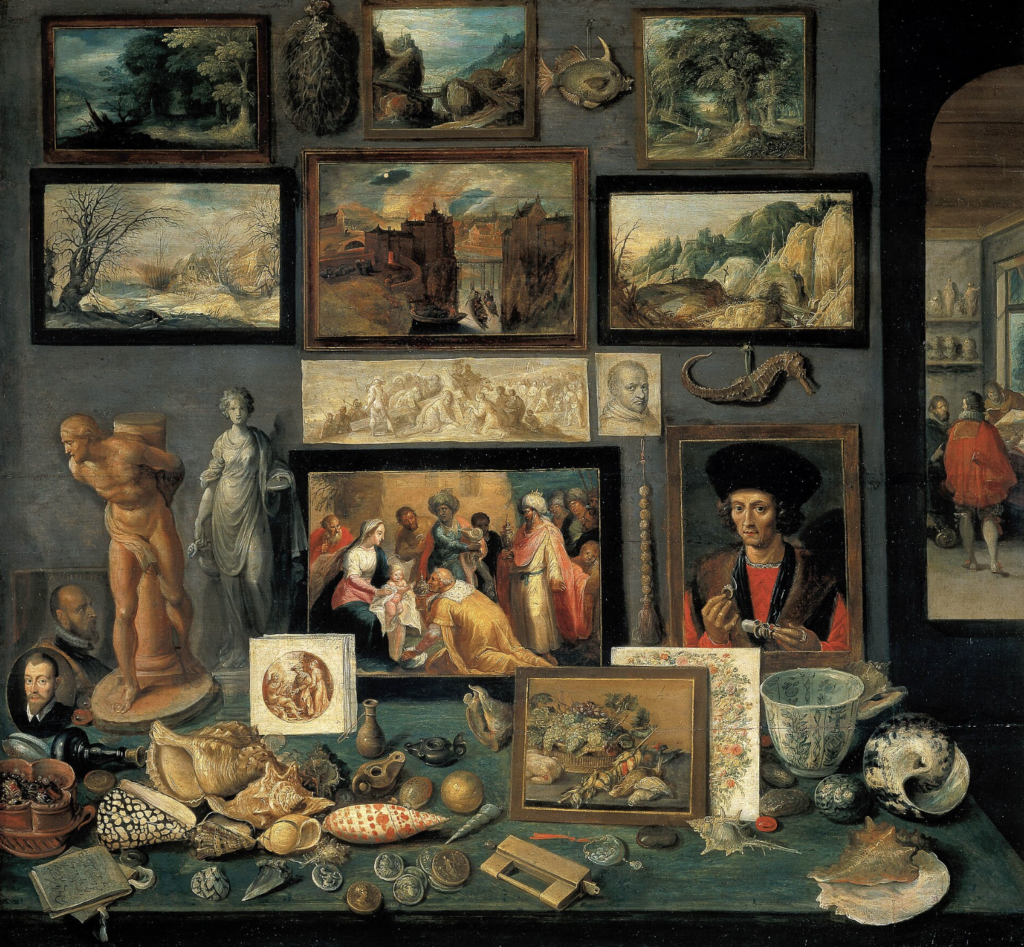
A Kunstkammer might contain paintings and sculptures alongside shells, fossils, minerals, scientific instruments, coins, antiquities, manuscripts, taxidermy, exotic animals, weapons, and objects brought back from distant lands. There was often little distinction between what we would today consider art, science, history, and natural history. The collection itself was an expression of curiosity, a way of bringing together objects that inspired wonder and offered an opportunity to learn about the world.
These cabinets were not simply storage rooms. They were carefully arranged environments designed to inspire conversation and discovery.
Exploration, Trade, and the Collecting Impulse
The rise of the Cabinet of Curiosities was closely connected to the Age of Exploration, particularly from the latter half of the fifteenth through the sixteenth century, when European explorers undertook arduous and often dangerous voyages in search of new lands, resources, trade routes, and riches. Their journeys brought an unprecedented array of unfamiliar objects back to Europe—from shells, minerals, plants, and animals to textiles, artifacts, and other objects from distant cultures.
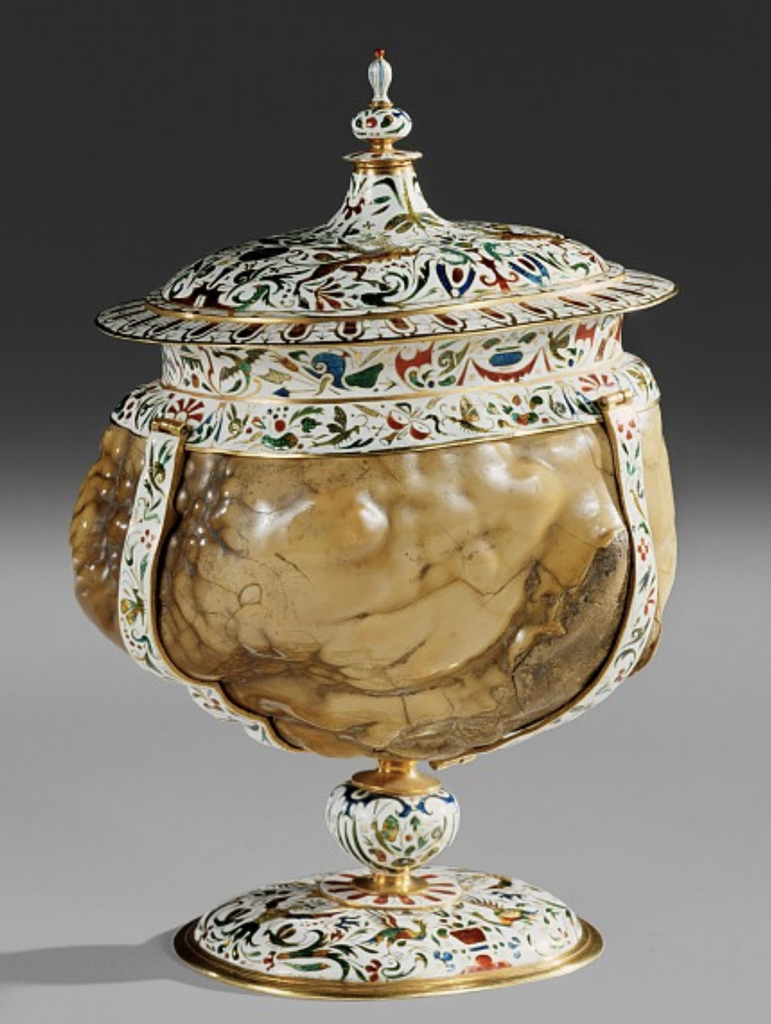
As global trade expanded, these discoveries became increasingly accessible to royalty and wealthy merchants. Take for example the collection of Habsburg Emperor Rudolf II of Prague (1552-1612), who was one of the great collectors of the late Renaissance, transforming his court into a center of art, science, and curiosity. His Kunstkammer at Prague Castle grew to such an extraordinary scale that his collections occupied a substantial portion of the castle. Rudolf assembled paintings and sculptures alongside scientific instruments, antiquities, minerals, natural specimens, and other rarities from across Europe and beyond. His collection included the likes of stuffed crocodiles and exotic animals, over 470 works of art including the fantastical portrait of Rudolf by Giuseppe Arcimboldo and nearly 600 vessels made of exotic specimens such as coconut shells, nautilus shell, agate, gemstones and bezoar stone, a natural mass formed in a gastrointestinal track.
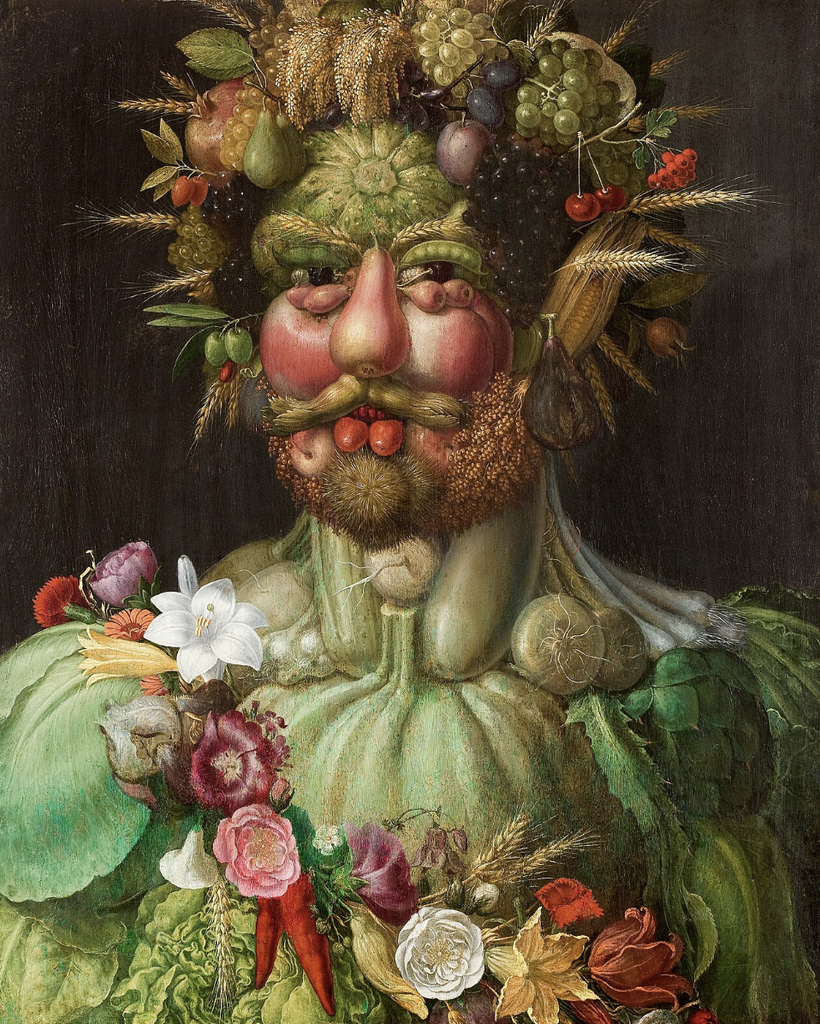
Rudolf’s collection demonstrated his knowledge, access, taste, and connections to the wider world. Possessing something rare, or something few people had ever seen was a source of intellectual fascination and social distinction, as well as a display of his power. Although Rudolf’s collection was plundered in 1648, a portion of his collection is on display in the Kunsthistorisches Museum, Vienna, Austria.
Collecting Wasn’t Just for Royalty
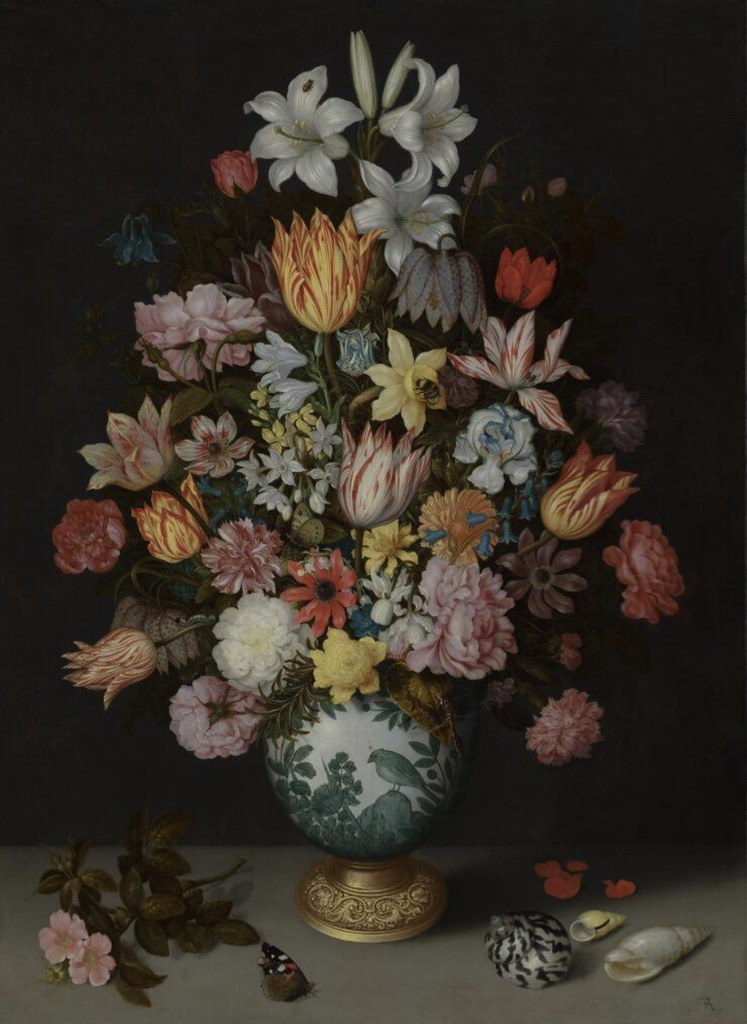
These curious collections weren’t just for royalty. During the Dutch Golden Age of the seventeenth century, Amsterdam emerged as a major center of international commerce, and the influx of goods from around the world helped fuel an extraordinary enthusiasm for collecting. For these collectors, assembling rare and exotic objects was not simply a display of wealth and status; it was also a way to demonstrate knowledge, curiosity, and a connection to an expanding world. Rare and precious objects like blue and white porcelain vases and plates from China or an exotic seashell from a faraway land can also be found depicted in still life paintings of the era.
Why Collect Rarities?
The objects found in early cabinets were coveted for many different reasons. Some were rare; others were strange, beautiful, ancient, exotic, technically ingenious, or simply difficult to obtain. A nautilus shell could be as intriguing as a Renaissance painting. A mineral might sit beside an archaeological artifact or a coin from a faraway land. Their value was not necessarily monetary. It could be cultural, scientific, historical, personal, or simply the pleasure of discovery.
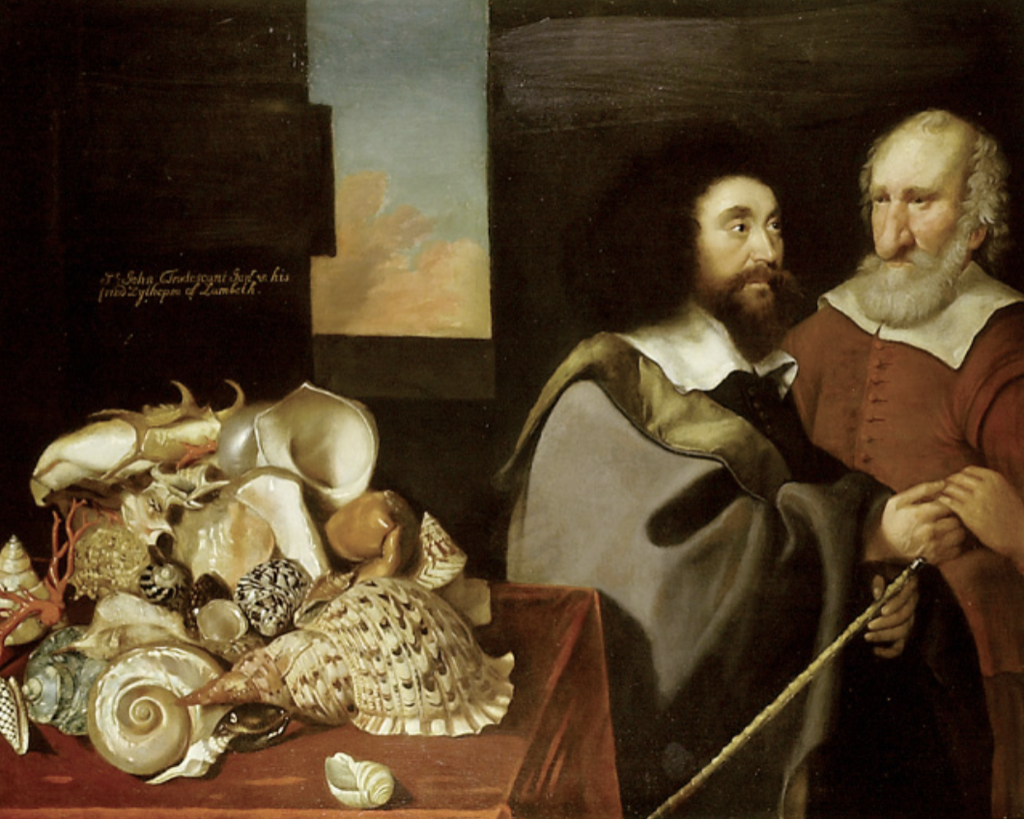
At the heart of collecting was the desire to understand the world by bringing pieces of it together. English gardeners John Tradescant the Elder (c.1570-1638) and his son, John the Younger (1608-1662) were pioneers whose curiosity (and financial interests) took them across Europe, North Africa, and the Levant in search of rare plants, natural specimens, antiquities, and extraordinary manmade objects. Traveling on behalf of English nobility, including King Charles I, the Tradescant’s also assembled a remarkable collection of their own, bringing together curiosities from around the world in a cabinet of wonders known as Tradescant’s Ark, which was opened out of his home in Lambeth to the paying public for a fee of sixpence, creating what is widely regarded as England’s first public museum. His son continued to expand the collection, which eventually passed to Elias Ashmole and formed the foundation of the Ashmolean Museum in Oxford, founded in 1683. The Tradescant’s collection embodied the curious spirit of the Kunstkammer and helped establish the foundations of the modern museum.
The Appeal of the Strange
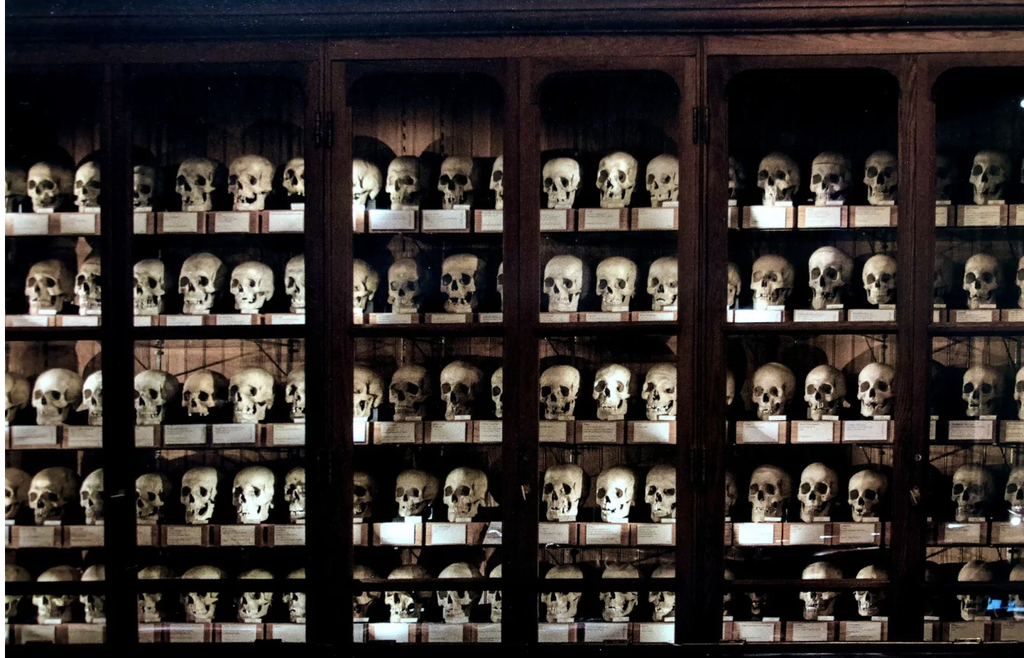
Not everything collected was beautiful. In fact, some of the most compelling objects were unusual, mysterious, or even unsettling. Curiosities and “oddities” challenged conventional ideas about the natural world and offered an opportunity to study what was unfamiliar. Take for a fascinating example the Mütter Museum in Philadelphia, a 19th-century “cabinet museum” whose collection is not for the faint of heart. The museum began with physician Thomas Dent Mütter’s 1859 donation of more than 1,700 objects, including anatomical specimens in formaldehyde (such as a two-headed fetus), medical instruments, models, and other objects documenting human anomalies and the history of medicine. While some may initially seem unsettling, Mütter’s purpose was not simply to collect the unusual or abnormal, but to advance medical education and preserve objects that could contribute to a greater understanding of human anatomy and the practice of medicine.
Collecting Today
Today’s collectors may pursue art, jewelry, watches, rare books, design, automobiles, wine, scientific objects, sports memorabilia, or any number of specialized categories. While the objects of desire may have changed, the motivations can feel remarkably familiar.
Just as Renaissance and Dutch Golden Age collectors sought objects that were unusual, exotic, or difficult to obtain, today’s collectors are often drawn to the painting, sculpture, jewel, manuscript, or other object that is genuinely scarce. Rarity can create a sense of discovery and distinction, but it can also deepen a collector’s connection to an object—particularly when it has an exceptional history, provenance, craftsmanship, or significance within an artist’s career.
In today’s global art market, collectors have access to an extraordinary range of objects through galleries, auction houses, online platforms, and international networks. Yet the opportunity to acquire something that rarely comes to market, or perhaps has never been publicly offered before, can still feel like a discovery. In this sense, the modern collector shares something with the collectors of centuries past: the excitement of finding an object that is unusual, elusive, and worthy of preserving.
Perhaps that is the enduring curiosity of collecting. We collect not only because an object has value, but because it captures our attention, tells a story, satisfies a question, or opens a door to something we want to know more about. A collection, whether assembled centuries ago or today, ultimately becomes a portrait of the collector’s curiosity.
###
Art Peritus is a leading fine art appraisal and luxury asset appraisal firm, providing USPAP-compliant appraisals, expert valuations, and consulting services for collectors, estates, insurers, attorneys, fiduciaries, and family offices. Our specialists appraise fine art and more than 70 categories of collectibles and luxury assets, including artwork, antiques, decorative arts, jewelry, wine, rare books, watches, and memorabilia. Since 2007, Art Peritus also offers comprehensive art collection management, art advisory, collection inventory, valuation consulting, and strategic art consulting services to help clients protect, manage, and maximize the value of their collections.
Learn more about our services:  What We Do
#CuriosityOfCollecting #CabinetOfCuriosities #ArtCollecting #ArtCollectors #Kunstkammer #Wunderkammer #Collecting #RareObjects #ArtHistory #ArtMarket