
There is something about summer that captures the imagination. Colors feel brighter. Time stretches like a long afternoon nap under the shade of a tree. Ordinary moments take on an almost cinematic brilliance in intense sunlight. It is no surprise, then, that Pop Art feels so closely tied to the summer season. Its imagery thrives on pleasures not meant to last forever: an ice cream cone melting too quickly, a day at the beach, the cool shock of a swimming pool on a sweltering day.
Pop Art has always blurred the boundaries between seriousness and play, fine art and mass production, but another thread runs through the movement just as powerfully: nostalgia. Beneath the bright colors and commercial imagery lies a longing to preserve fleeting experiences and transform everyday pleasures into lasting memories.
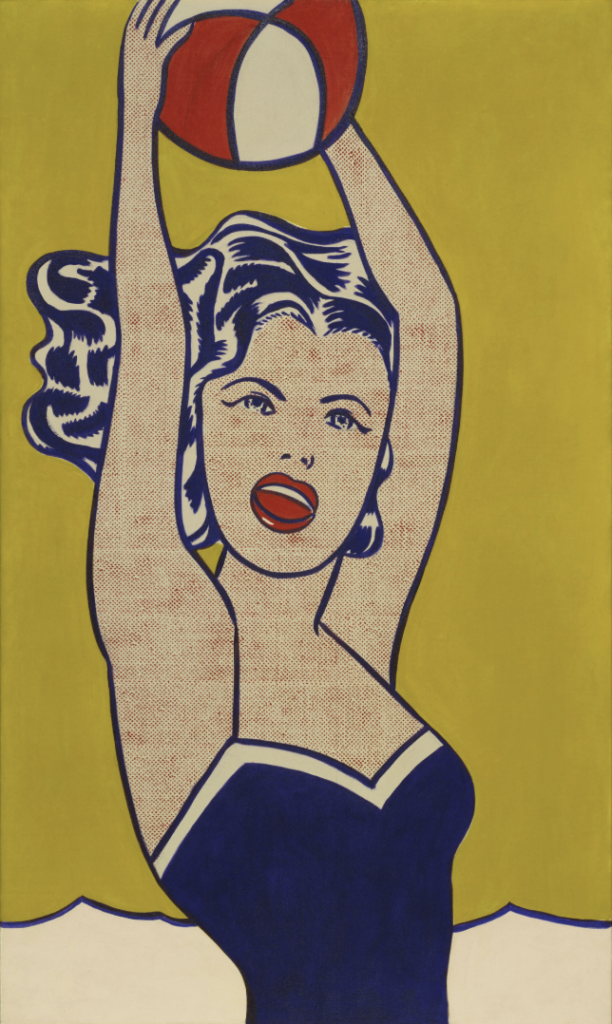
Roy Lichtenstein captured the playful and fleeting pleasures of summer through works like Girl with Ball and Hot Dog. Inspired by 1960s advertisements, Lichtenstein transformed images of a smiling beachgoer and a summer treat into bold Pop icons of everyday American culture. Stylized features, bright colors, and graphic Benday dots evoke the idealized fantasy of summertime leisure promoted through mass media. Together, these works reveal Lichtenstein’s fascination with the visual language of advertising and consumer culture, while also capturing the carefree energy, nostalgia, and artificial perfection often associated with summer itself.
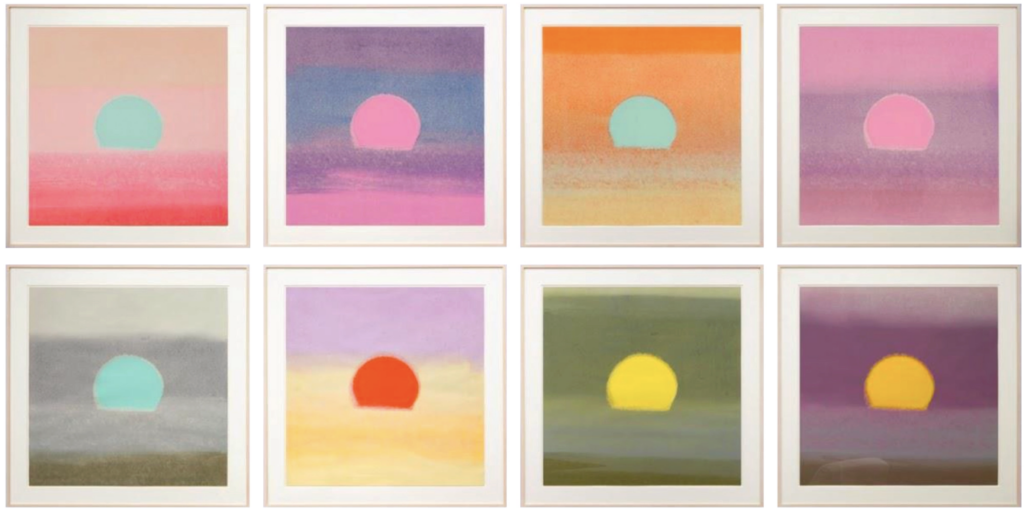
Andy Warhol approached this sense of nostalgia through repetition in his Sunset series from the 1970s. He transformed the simple image of a setting sun into a Pop icon saturated with electric pinks, glowing oranges, and endless variations of color. Unlike his celebrity portraits and commercial products that made him famous, Warhol’s sunsets feel unexpectedly sentimental. Mass-produced yet deeply atmospheric, they blur the line between artificiality and memory, like a postcard from a summer that never truly existed but somehow still feels familiar.
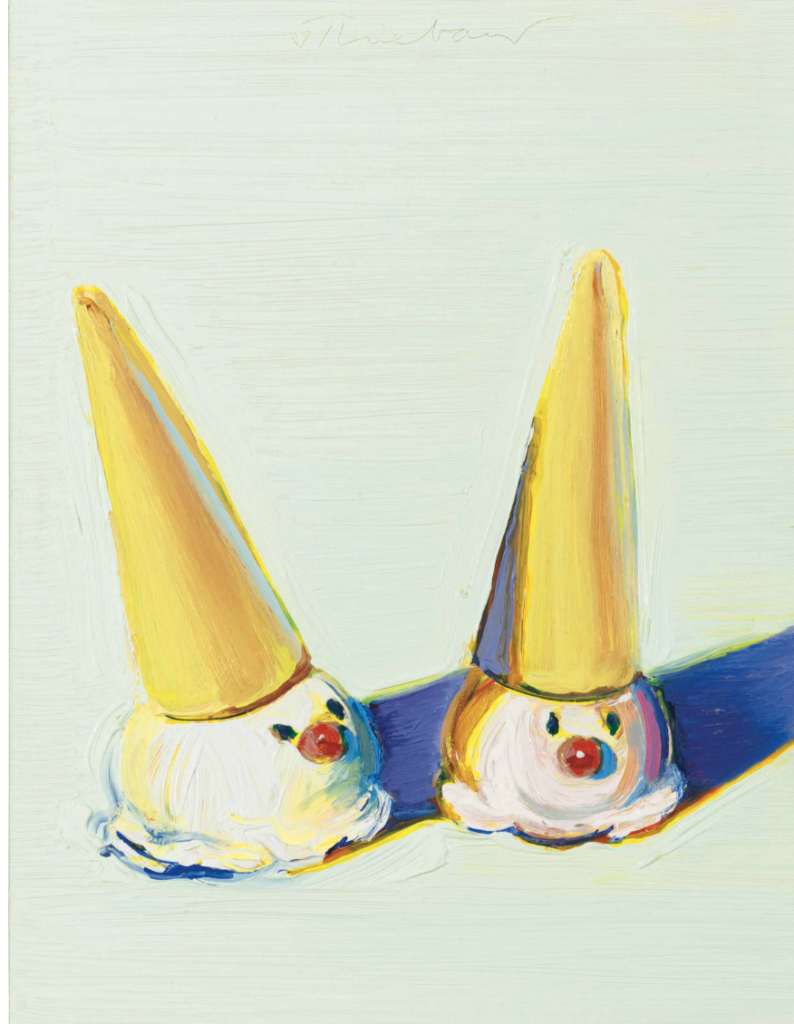
No artist captures the indulgence of summer treats quite like Wayne Thiebaud. Although Thiebaud’s style bridges Realism and Pop Art, his focus on commercial display and everyday sweets aligns closely with Pop Art’s fascination with consumer culture. His paintings of cakes, candies, and ice cream cones transform everyday confections into objects of desire and nostalgia. Thick impasto mimics frosting and melting ice cream, blurring the line between representation and sensation. In the context of summer, his sweets feel immediate yet fleeting, pleasures destined to disappear almost as soon as they are enjoyed.
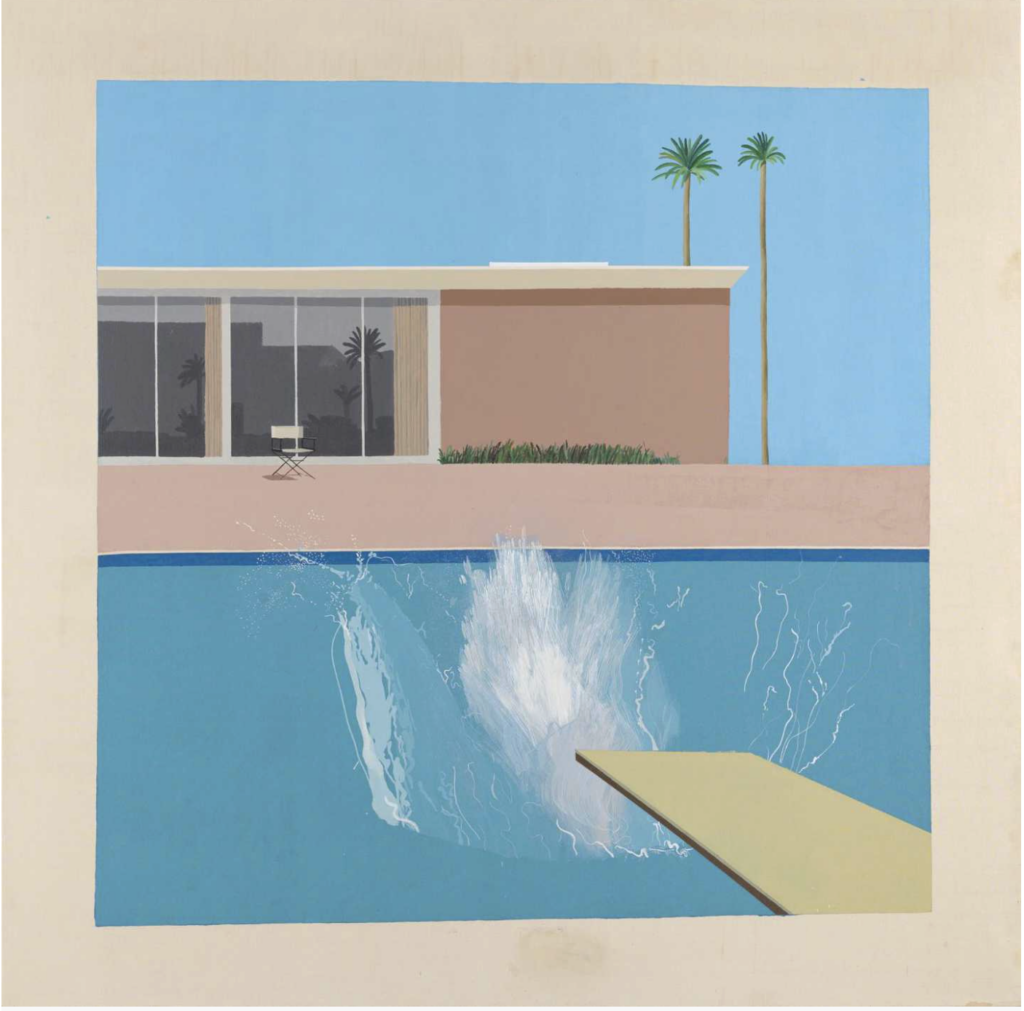
A quieter and more atmospheric form of nostalgia emerges in the work of David Hockney, whose artistic style also bridges Realism and Pop Art. His sun-drenched pools and luminous California landscapes capture the sensory essence of summer itself: the stillness of heat, the shimmer of water, the saturation of color under intense sunlight. Like a memory, his paintings feel suspended in time: a splash in a swimming pool, a beach umbrella against cloudless sky, a perfect summer afternoon held indefinitely in paint.
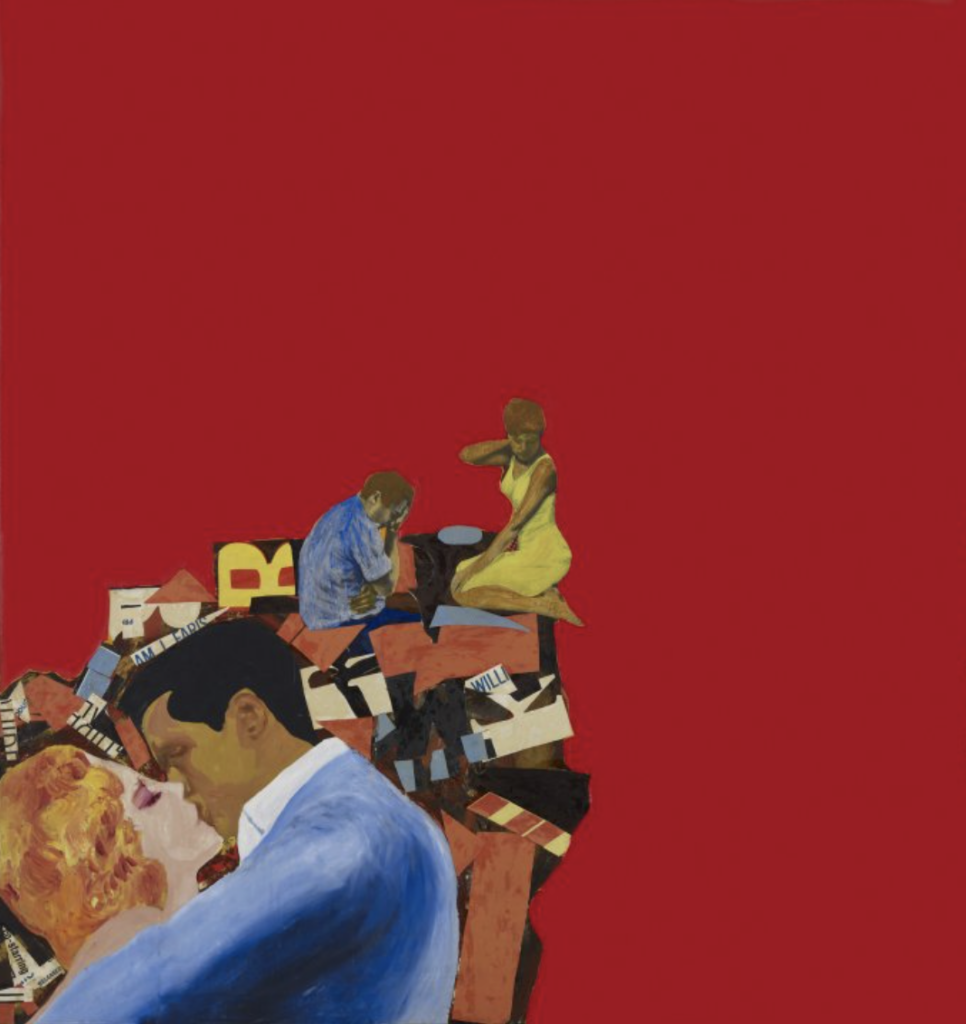
Rosalyn Drexler brought a distinctly cinematic and emotionally charged perspective to Pop Art, using imagery drawn from film stills, advertisements, and popular media to explore desire, memory, and nostalgia. Drexler isolates intimate moments and transforms them into fragmented, almost dreamlike scenes suspended between romance and melancholy. Unlike the cool detachment often associated with Pop Art, her paintings feel deeply psychological, capturing the way memories of love and longing linger long after the moment itself has passed. Cropped compositions, flattened color fields, and dramatic gestures heighten the sense of nostalgia, as though viewers are recalling scenes from an old movie or a faded summer memory.
As Pop Art evolved into Neo-Pop in the 1980s and beyond, contemporary artists expanded its fascination with consumer culture, spectacle, and excess. Artists such as Yayoi Kusama, Jeff Koons, and Takashi Murakami revitalized Pop’s visual language by blending commercialism, kitsch, graffiti, anime, and luxury branding into immersive experiences.
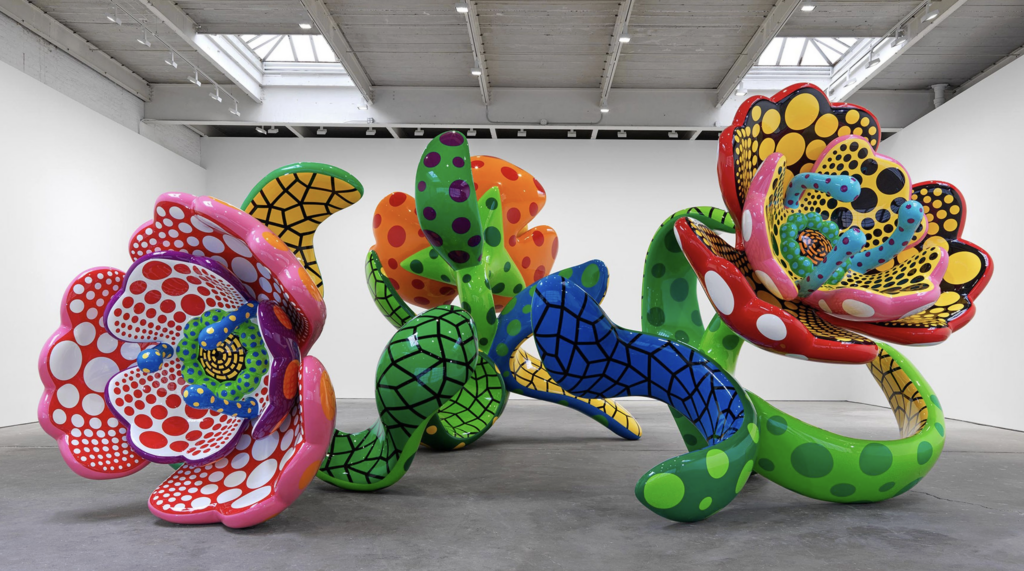
Yayoi Kusama transforms repetition into something both whimsical and infinite. Her polka-dotted sculptures and mirrored installations echo Pop Art’s fascination with pattern and mass production while pushing it into the experiential realm. Kusama’s monumental flower sculptures and mirror ball installations feel almost like hallucinations of summer: bright, disorienting, joyful, and slightly surreal. Her work captures the way summer itself can feel immersive and endless, as though one has stepped into a world made entirely of color and light.
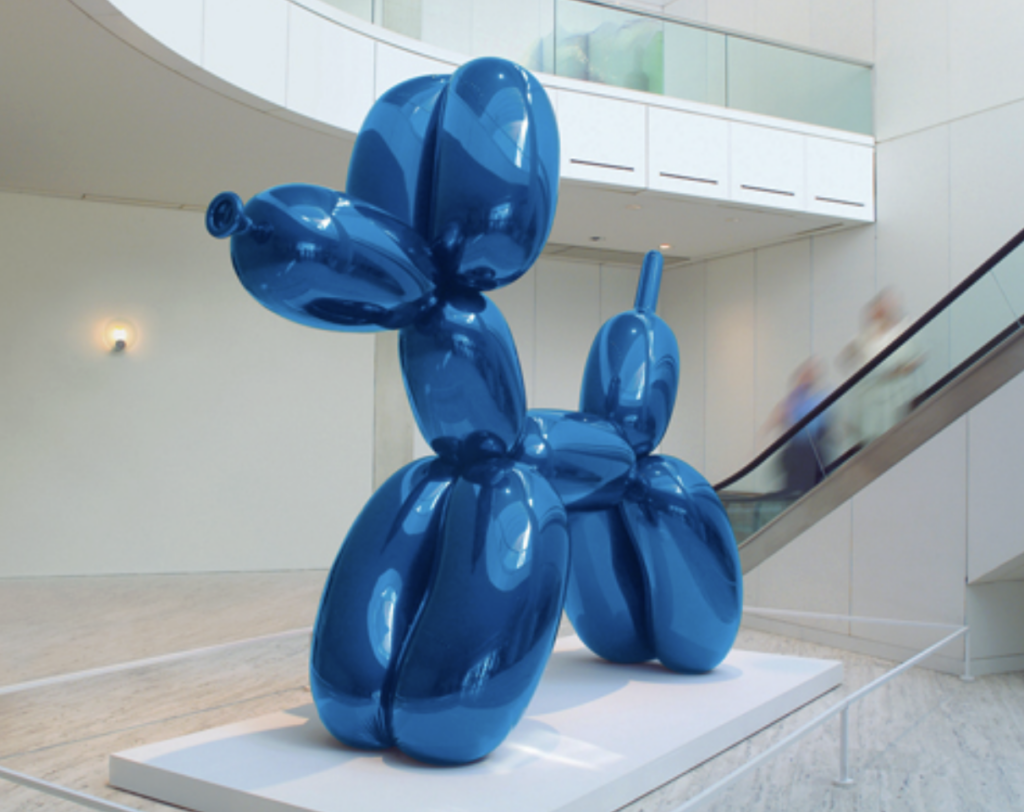
Jeff Koons embraces the playful excess at the heart of Neo-Pop. Taking Pop’s fascination with commercial imagery to its most polished extreme, Koons transforms ordinary objects into monumental icons of spectacle and desire. Works such as Balloon Dog and Rabbit elevate the fleeting joy of carnival balloon animals into gleaming monuments of nostalgia. Rendered in mirror-like stainless steel, these sculptures reflect viewers back at themselves, turning simple amusement park pleasures into symbols of childhood wonder, consumer culture, and contemporary excess.
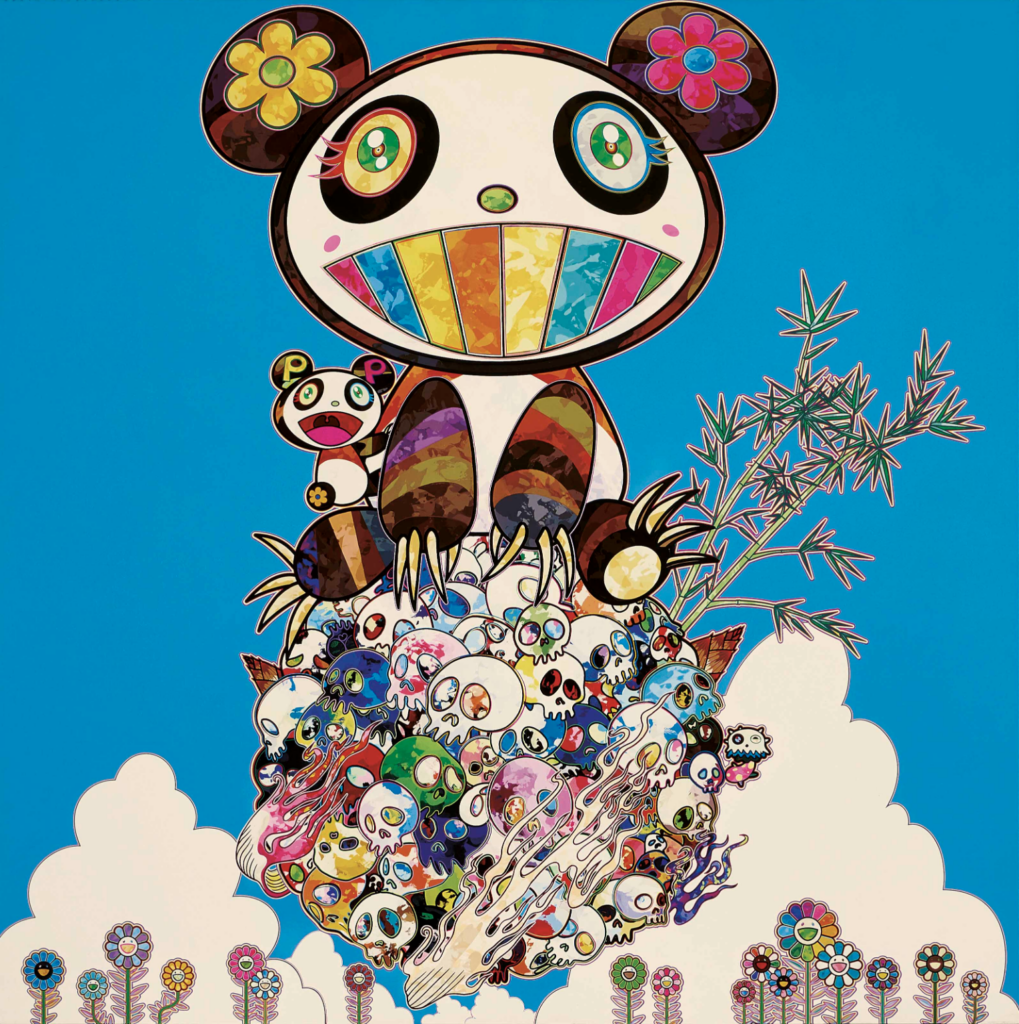
Takashi Murakami carries Pop Art into the 21st century through his Superflat aesthetic, merging traditional Japanese art with anime, consumer culture, and luxury branding. His radiant flowers and kaleidoscopic compositions feel tailor-made for summer: exuberant, immersive, and visually overwhelming. Beneath their cheerful surfaces lies a subtle critique of consumerism and spectacle, revealing how deeply commercial imagery shapes modern life and memory.
Together, these artists reveal the extraordinary range within Pop Art and Neo-Pop. Though their approaches differ, they share a fascination with transforming the ordinary into the iconic. Summer, like Pop Art itself, is fleeting, saturated, indulgent, and deeply nostalgic. Both celebrate the brilliance of everyday life while reminding us how quickly those moments disappear.
###
Art Peritus is a leading fine art appraisal and luxury asset appraisal firm, providing USPAP-compliant appraisals, expert valuations, and consulting services for collectors, estates, insurers, attorneys, fiduciaries, and family offices. Our specialists appraise fine art and more than 70 categories of collectibles and luxury assets, including antiques, decorative arts, jewelry, wine, rare books, watches, and memorabilia. Since 2007, Art Peritus also offers comprehensive art collection management, art advisory, collection inventory, valuation consulting, and strategic art consulting services to help clients protect, manage, and maximize the value of their collections.
Learn more about our services: https://artperitus.com/what-we-do/
#PopArt #NeoPop #ContemporaryArt #ArtHistory #ArtAdvisory #ArtCollecting