
Throughout history, artists have often looked forward by looking back. Long before the emergence of modernism, abstraction, and Art Deco design, ancient cultures were already experimenting with bold geometry, stylized form, and expressive simplification. Seen through a contemporary lens, many ancient artifacts and naturally formed objects feel strikingly modern—sometimes resembling abstract sculpture or twentieth-century design. From prehistoric fossils to ancient objects, these works remind us that the visual language we associate with modern art has deep roots in the past.
Mother Nature as the First Sculptor
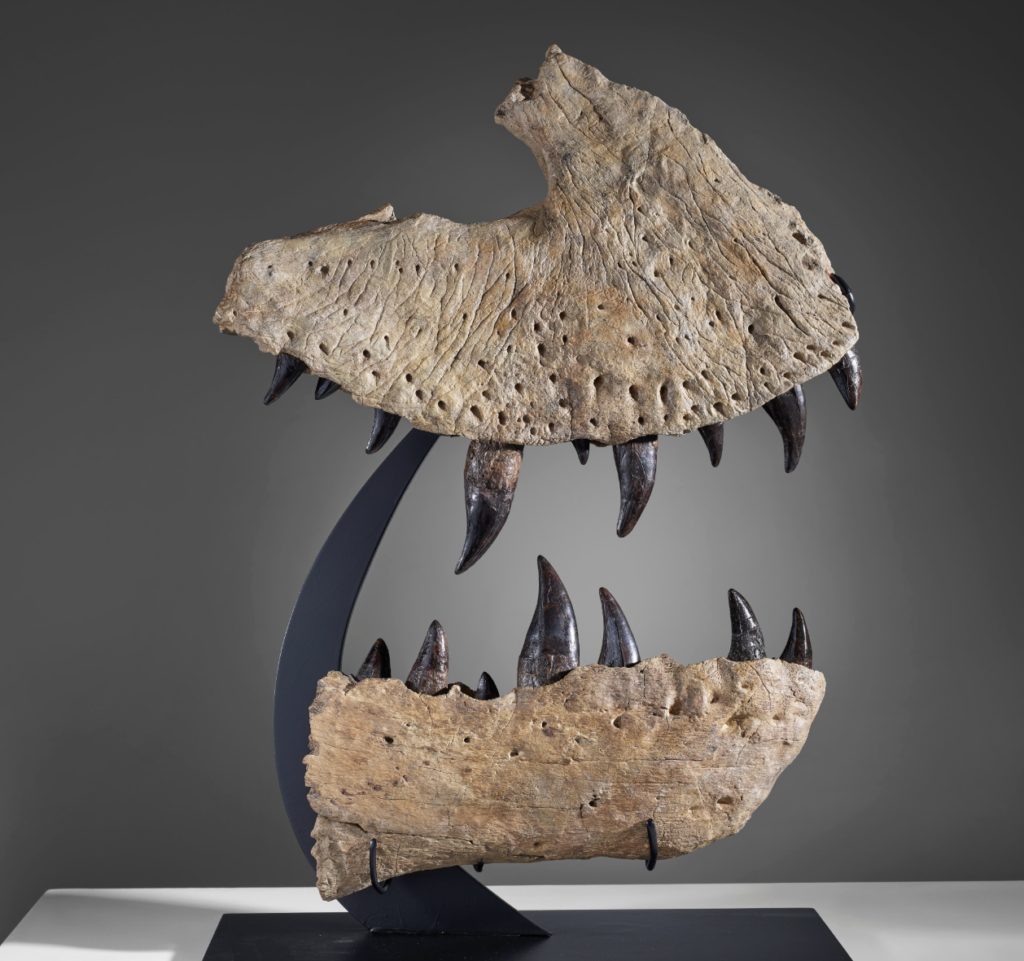
Consider the massive jaw of a Tyrannosaurus rex, dating to the Late Cretaceous Period, roughly 66 million years ago. While technically a fossil rather than a work of art, its presence can feel surprisingly sculptural. The dramatic curves of bone, the rhythmic spacing of teeth, and the monumental scale echo the expressive forms explored by modern sculptors in the twentieth century.
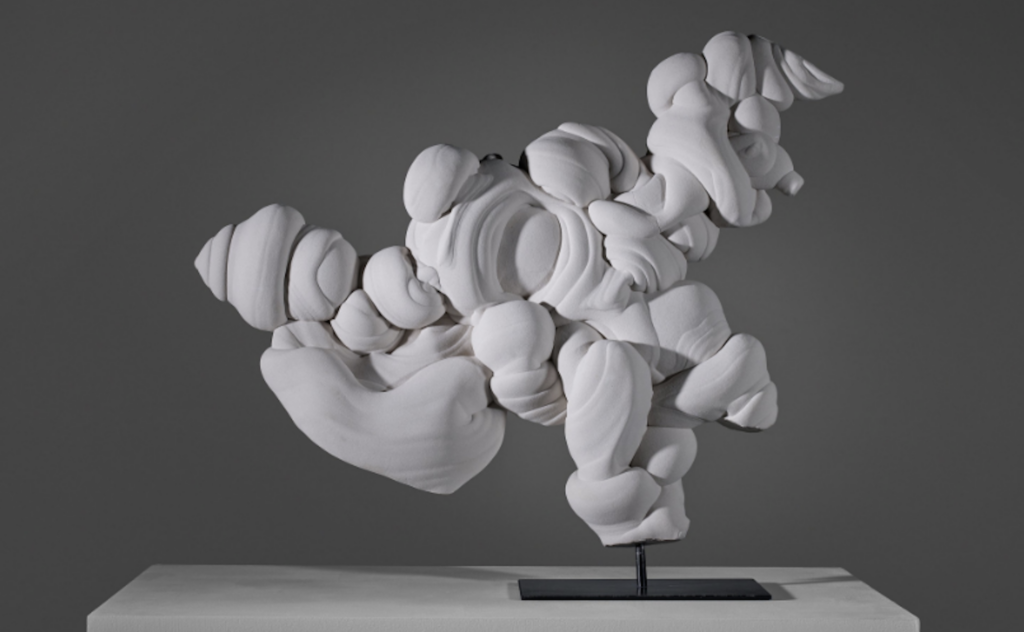
Another natural object with a similar resonance is the Gogotte formation from Fontainebleau, France, created roughly 30–40 million years ago. Gogottes are naturally occurring sandstone concretions whose soft, undulating surfaces resemble flowing fabric or draped forms. Their sculptural elegance captivated collectors in the eighteenth and nineteenth centuries, including King Louis XIV, who displayed them at the Palace of Versailles. Today, their abstract shapes feel strikingly contemporary, comparable to modern minimalist or biomorphic sculpture.
Early Abstraction in Prehistoric Art
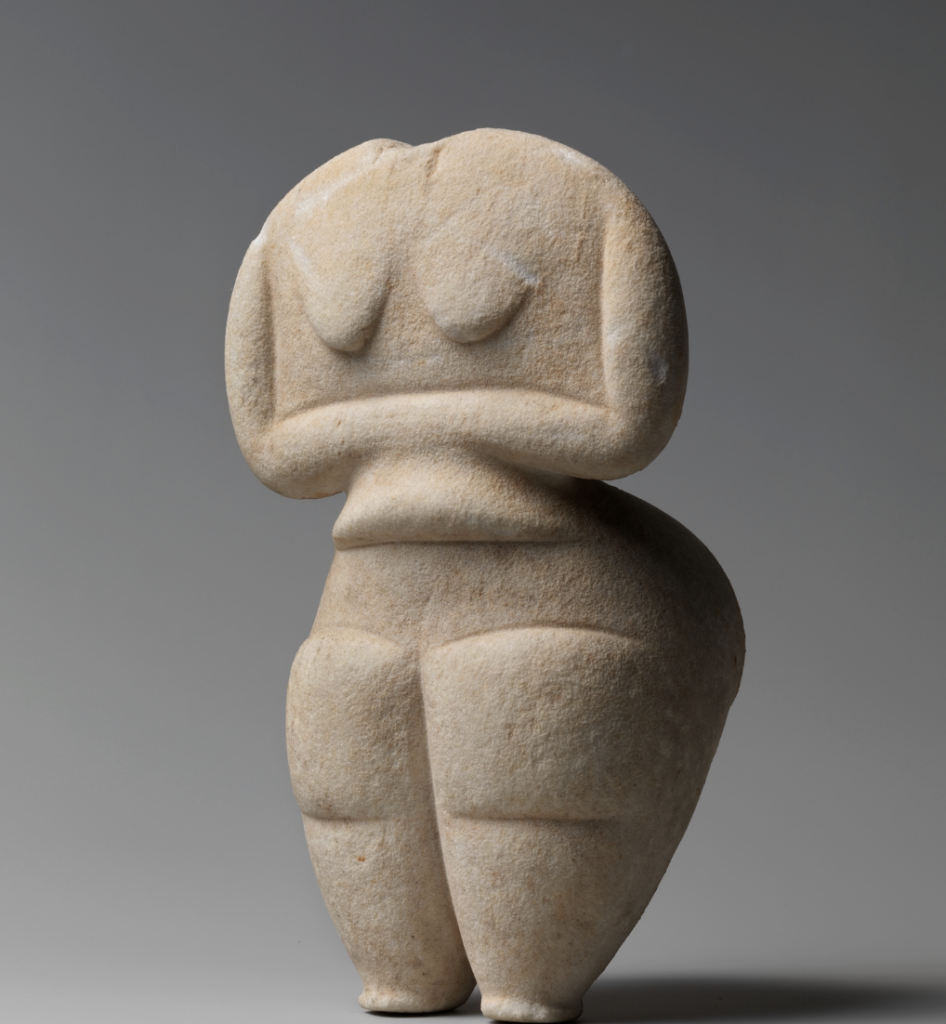
Human creativity emerges clearly in a Neolithic female figurine dating to around 4500–4000 BCE. These small sculptures often simplify the human form into essential shapes—rounded hips, tapering limbs, and minimal facial detail. Rather than striving for realism, the artist distilled the body into symbolic geometry. Seen today, the figurine’s reductive style anticipates the expressive abstraction explored thousands of years later by modern artists such as Constantin Brâncuși.
Brâncuși famously sought to capture the “essence” of a subject rather than its literal appearance, a philosophy that resonates strongly with prehistoric sculpture. The Neolithic creator, working with simple tools and materials, arrived at a similar visual solution: a powerful abstraction that communicates form, fertility, and presence without unnecessary detail.
Classical Elegance and Early Modern Design
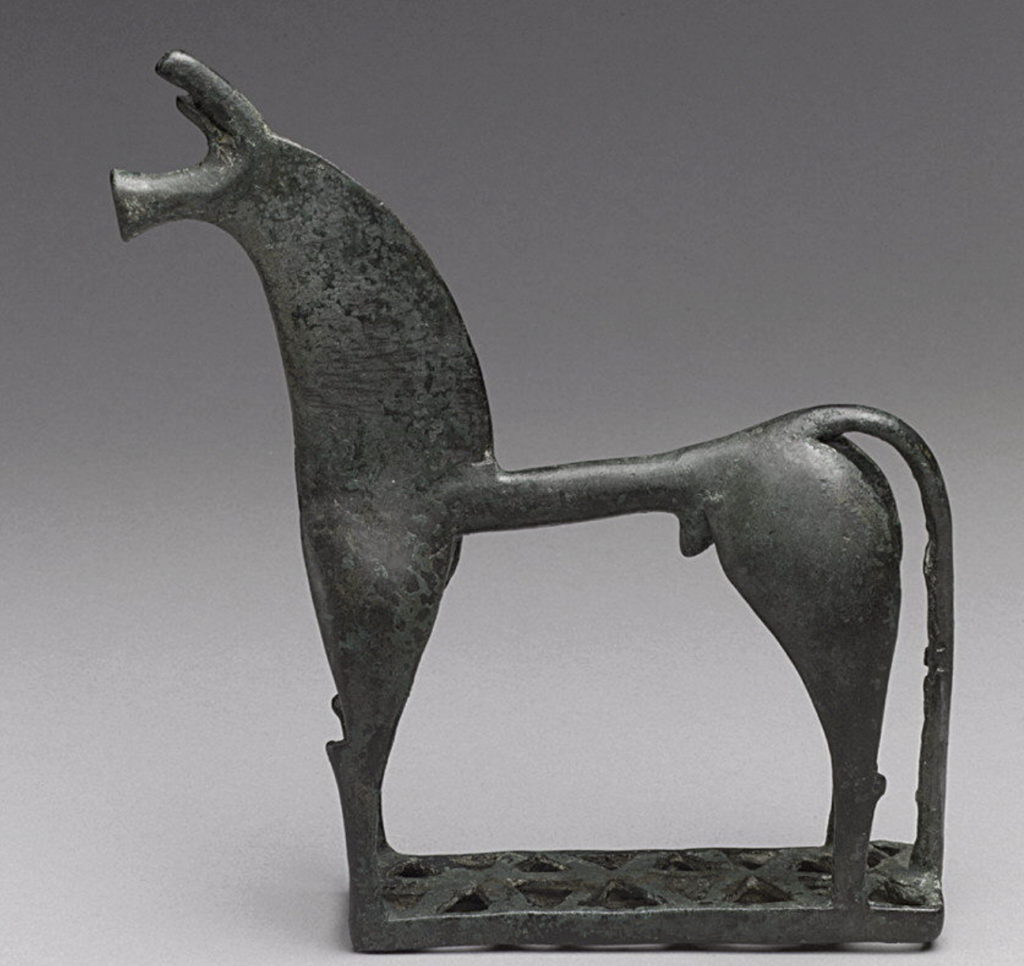
Ancient Greek artists also produced objects whose forms feel surprisingly modern. A Greek bronze horse from the eighth century BCE, for instance, demonstrates how early Greek artisans simplified animal forms into angular silhouettes and elongated proportions. The stylized geometry of the horse—its triangular body and linear legs—resembles modernist explorations of form and structure.

Similarly, a Greek marble shell from around 400 BCE highlights the timeless appeal of pure design. The object’s symmetrical ridges and elegant curvature could easily be mistaken for a modern decorative sculpture or even an industrial design prototype. Its refined balance between naturalism and stylization foreshadows the design principles that would become central to twentieth-century aesthetics.
Ancient Egypt and the Origins of Art Deco
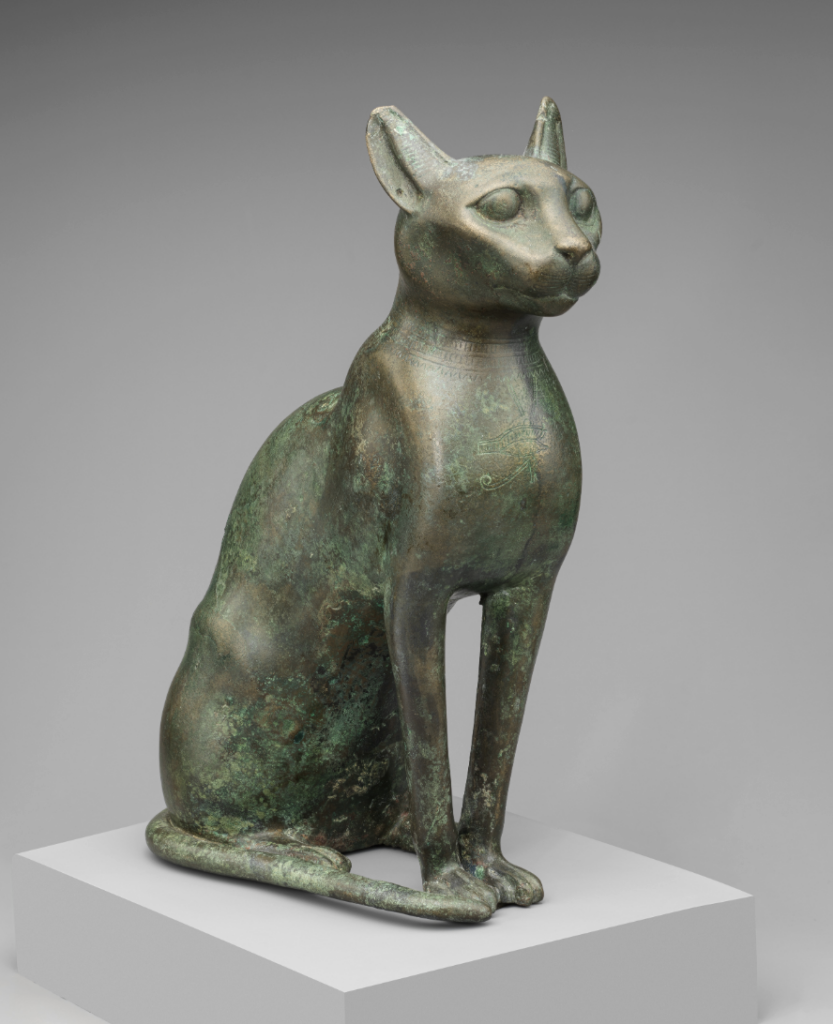
Few ancient cultures have influenced modern design as strongly as ancient Egypt. The sleek lines and stylized elegance of Egyptian sculpture and artifacts played a crucial role in shaping the visual vocabulary of Art Deco, particularly after the global fascination sparked by the discovery of Tutankhamun’s Tomb in 1922.
An excellent example is an Egyptian cat statuette dating to 332–30 BCE. With its upright posture, elongated body, and smooth surfaces, the sculpture possesses a refined minimalism that feels entirely modern. The crisp contours and symmetrical form echo the sleek decorative objects produced in the 1920s and 1930s. It is easy to imagine this ancient figure displayed alongside Art Deco furnishings or architectural ornament.
The enduring appeal of Egyptian design lies in its balance of stylization and symbolism. Egyptian artists developed a visual language of simplified shapes, rhythmic repetition, and polished surfaces—qualities that modern designers later embraced as hallmarks of elegance and sophistication.
Innovation in Ancient Materials
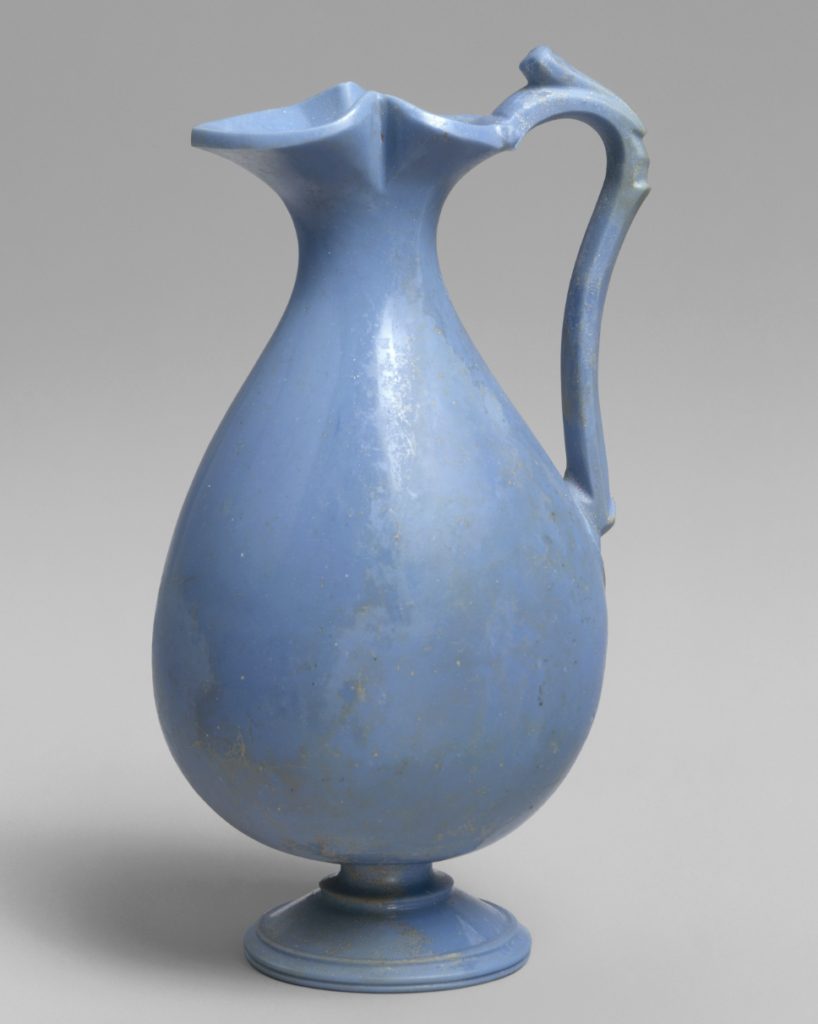
Moving into the Roman world, a Roman glass jug from the late first century BCE to the early first century CE demonstrates the technological innovation and aesthetic refinement of ancient artisans. Roman glassmakers were pioneers in glassblowing, producing vessels with delicate translucency and fluid form.
The jug’s graceful silhouette and luminous material evoke modern studio glass, particularly the work of artists associated with the twentieth-century studio glass movement. Its simplicity of shape—unencumbered by heavy ornament—anticipates modern design’s emphasis on purity and functionality.
Global Traditions of Sculptural Form
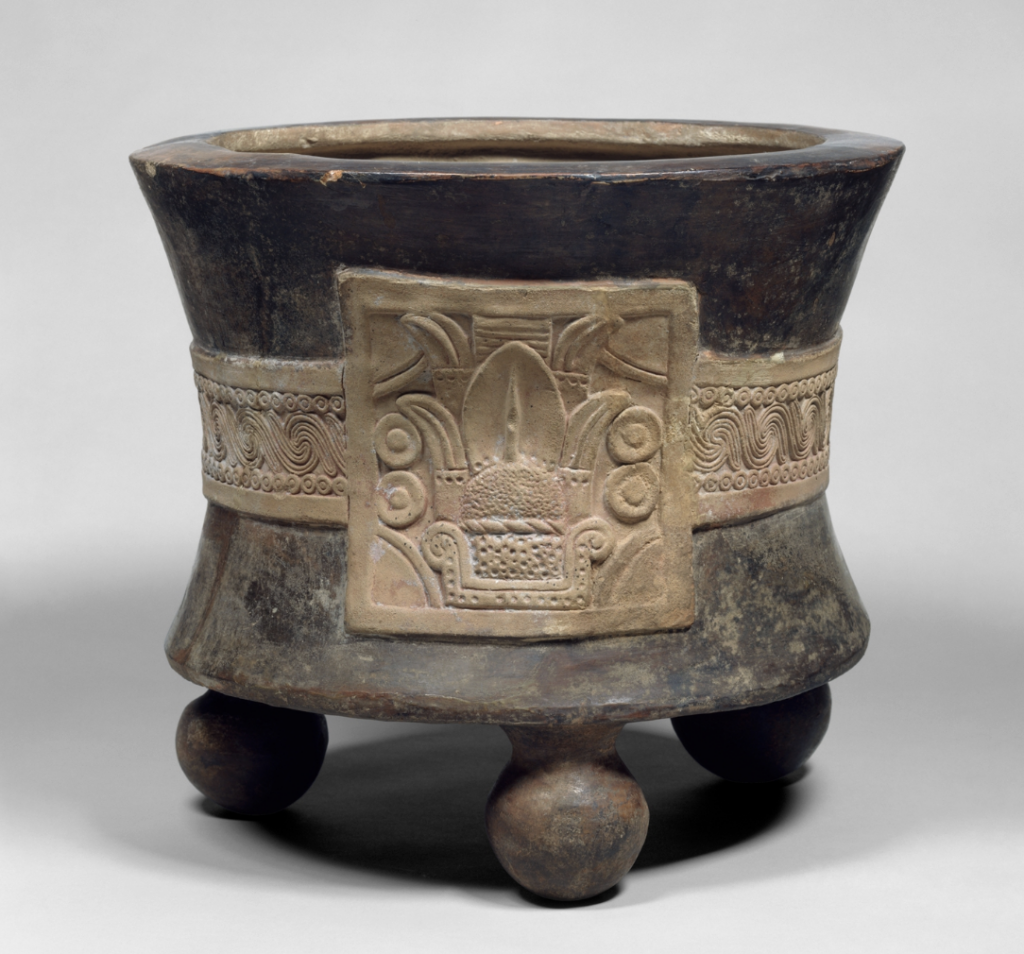
Across the Atlantic, an Aztec brazier created between 1430 and 1521 reveals a different but equally compelling approach to stylized design. Aztec ritual objects often feature bold geometric patterns and strong architectural structure that also echo elements of the Art Deco movement.
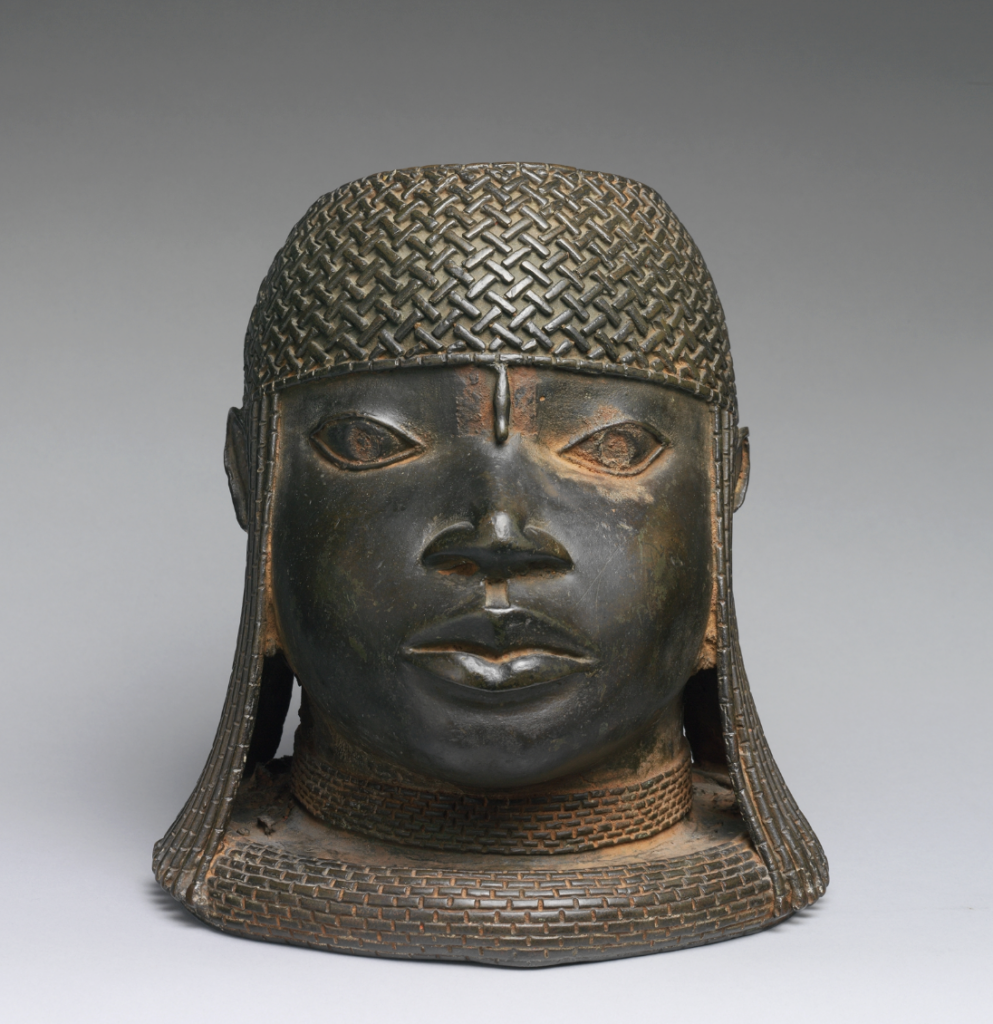
In West Africa, sculptural traditions flourished during the early 15th to mid-16th centuries. A Benin sculpture from this period demonstrates the sophisticated abstraction developed by African artists centuries before European modernism. The stylized features and rhythmic proportions found in these profoundly influenced twentieth-century artists, including Pablo Picasso and Amedeo Modigliani, who encountered African sculpture in European collections and recognized its radical approach to form.
The Continuity of Design
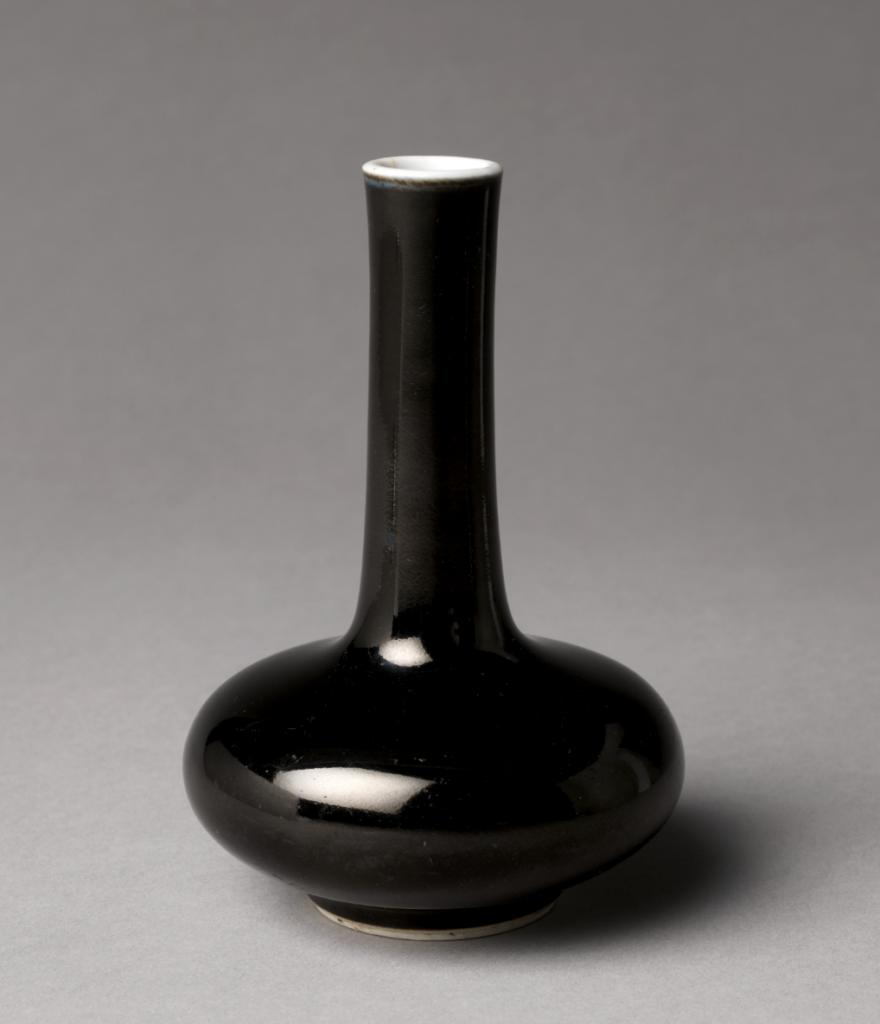
Finally, a Chinese vase from the late 17th to early 18th century illustrates how refined craftsmanship and elegant form continued to evolve across cultures and centuries. The vase’s balanced proportions and fluid silhouette embody a design sensibility that transcends time. Even today, such forms inspire contemporary ceramics and interior design.
Looking Back to See Forward
What unites these diverse objects—from fossils and prehistoric carvings to classical sculpture and ritual artifacts—is their remarkable visual resonance with modern aesthetics. Long before the rise of abstraction or modern design movements, artists across the world were already exploring the power of simplified form, geometric structure, and expressive material.
Recognizing these connections enriches our understanding of both ancient and modern art. The visual innovations often credited to twentieth-century artists were, in many ways, rediscoveries of ideas explored by earlier cultures. By studying the past, we gain insight into the continuity of artistic creativity—a reminder that the impulse toward abstraction, elegance, and expressive design is deeply embedded in human history.
In that sense, ancient and natural objects are not simply artifacts of distant civilizations or forces of nature. They are part of an ongoing conversation about form, beauty, and meaning—one that continues to inspire artists, designers, and collectors today.
###
Art Peritus is a leading fine art and luxury asset appraisal firm providing USPAP-compliant appraisals, expert valuations, collection management, and art advisory services for collectors, estates, insurers, attorneys, fiduciaries, and family offices.
Learn more about our services: https://artperitus.com/what-we-do/
#AncientArt #ContemporaryArt #ModernArt #AncientDesign #ArtAppraisals